
Developers Are No Longer Writing Code by Hand. They Manage the Agents That Write It
Claude authors more than 80% of merged code at Anthropic, while OpenAI built a million-line product without manual coding. Here is what engineers do next.
Key takeaways
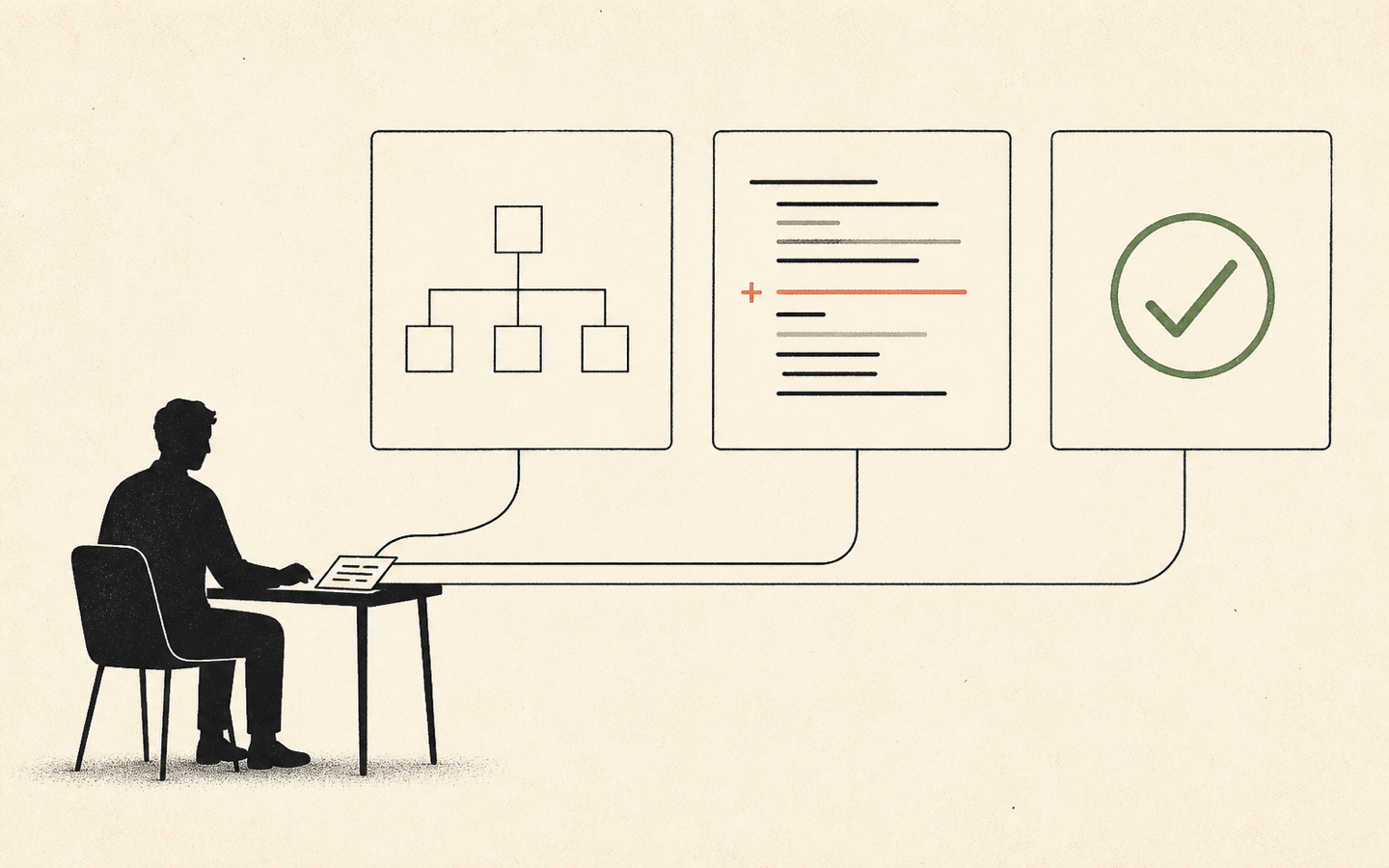
- In leading AI companies, typing code is no longer the engineer’s main job: people specify intent, shape the environment, review outcomes, and make decisions.
- Claude Code, Codex, and Kimi Code work across repositories, commands, and tests, making them execution agents rather than line completion tools.
- As code becomes faster to produce, context, requirements, architectural decisions, and governance become the constraint that Laplace helps organize.
Table of contents
Five months without writing a line of code
In February 2026, OpenAI described an internal experiment that would recently have sounded like provocation. A small team built a working product of roughly one million lines, including application code, tests, CI, documentation, observability, and internal tools. Humans manually wrote none of it; Codex created the entire repository.
Three engineers directed the agent through tasks and feedback. Over five months, the team merged about 1,500 pull requests and estimated that development took roughly one tenth of the usual time. This was not only a benchmark: hundreds of internal users and external alpha testers used the product.
Anthropic has already crossed 80%
At Anthropic, this is no isolated experiment. The company says that by May 2026, Claude authored more than 80% of code merged into its codebase. Before the Claude Code research preview launched in February 2025, that share was in the low single digits.
>80%
of Anthropic code authored by Claude
Share of merged code as of May 2026.
8×
more lines per engineer
Q2 2026 compared with 2024.
+67%
pull requests per engineer
Increase Anthropic associates with Claude Code adoption.
70–90%
code involving Claude Code
Range across Anthropic engineering teams in January 2026.
Discover where your team is losing context
Connect your workspace and identify fragmented, outdated, or missing context.
This is no longer autocomplete
First-generation copilots waited for a person to open a file and start typing. A coding agent receives a goal, explores the repository, edits several files, runs commands and tests, reads failures, and repeats the loop. Claude Code and Codex made this mode mainstream; Kimi Code is built around the same operating model.
- Autocomplete suggests a fragment; an agent completes an outcome.
- Autocomplete sees the cursor; an agent explores relationships across a repository.
- Autocomplete waits for a person; an agent calls tools and responds to their results.
- People used to edit the implementation; increasingly, they edit intent, constraints, and acceptance criteria.
If engineers do not type code, what do they do?
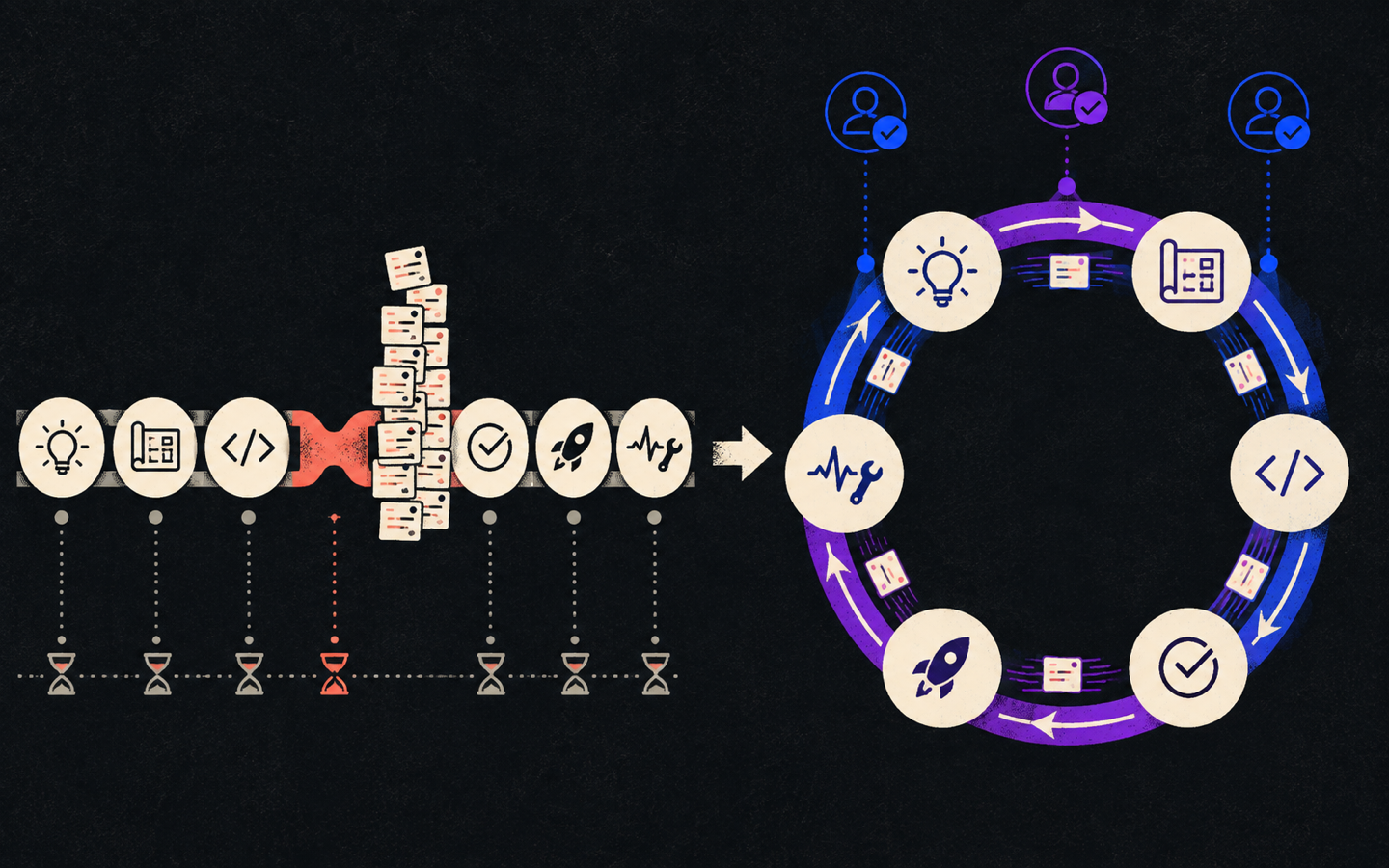
The closest analogy is a shift from implementer to director of a production system. A strong engineer chooses the problem, turns it into a verifiable task, gives the agent the right tools, defines architectural boundaries, and builds a short feedback loop.
- State intent and acceptance criteria before launching an agent.
- Make the repository legible through commands, rules, architecture, and constraints.
- Split a large goal into parts that can be verified independently.
- Review system behavior, risk, and fit with the business need.
- Turn recurring feedback into tests, rules, and automated checks.
- Decide what is worth building, not only how to implement it.
Knowledge of languages and architecture remains critical because it lets a person distinguish a sound solution from a plausible mistake. Typing syntax, however, becomes a smaller share of the job.
Code became cheap. Decisions did not
When an agent can produce ten implementations in the time one used to take, code stops being scarce. Human attention and context become scarce instead: the current brief, decision history, security constraints, customer data, and an understanding of how the change affects other processes.
The next competitive gap will therefore appear between companies whose agents can see coherent operational context and companies that feed them a random bundle of tickets, documents, and messages.
Why coding agents need Laplace
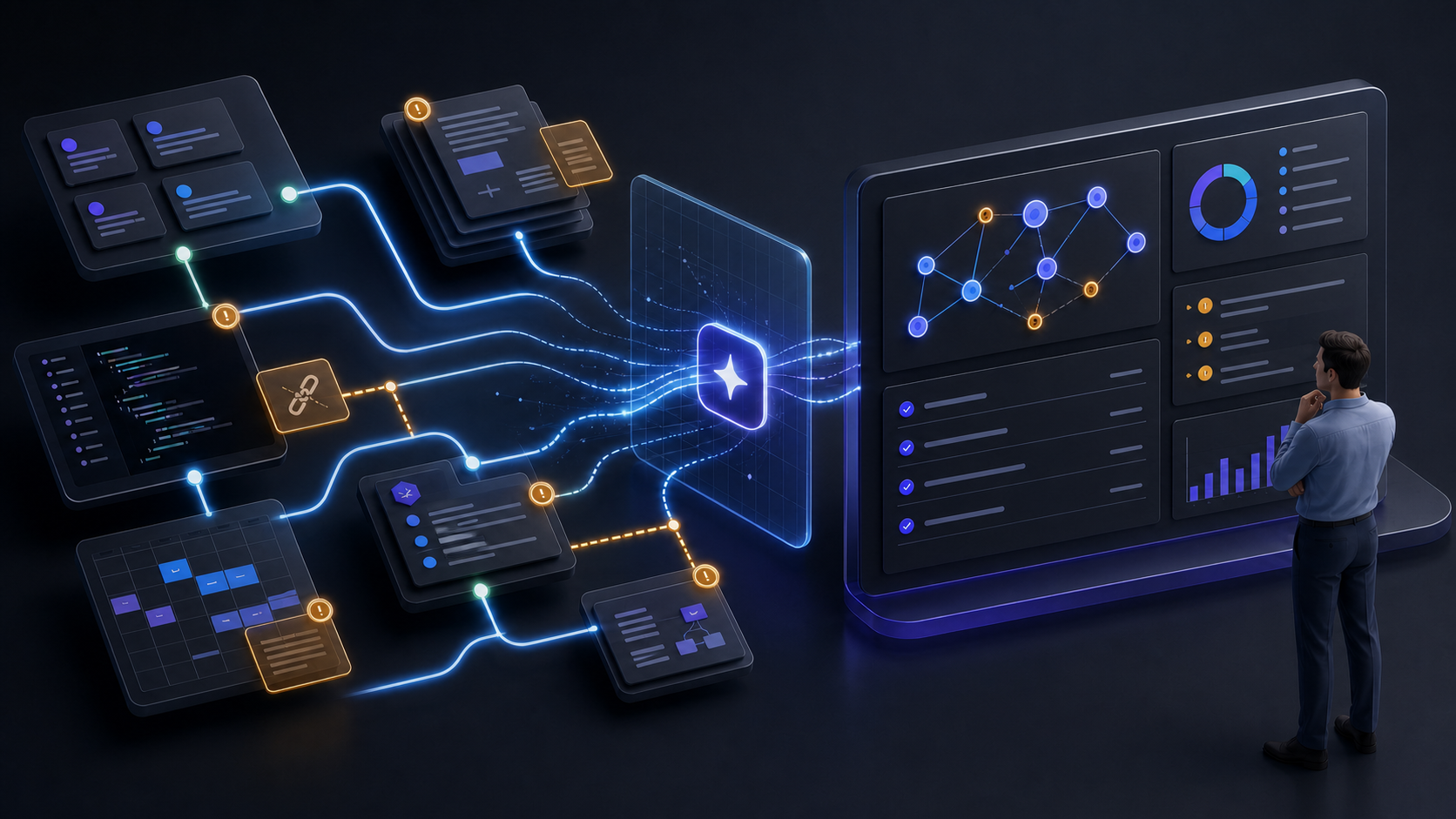
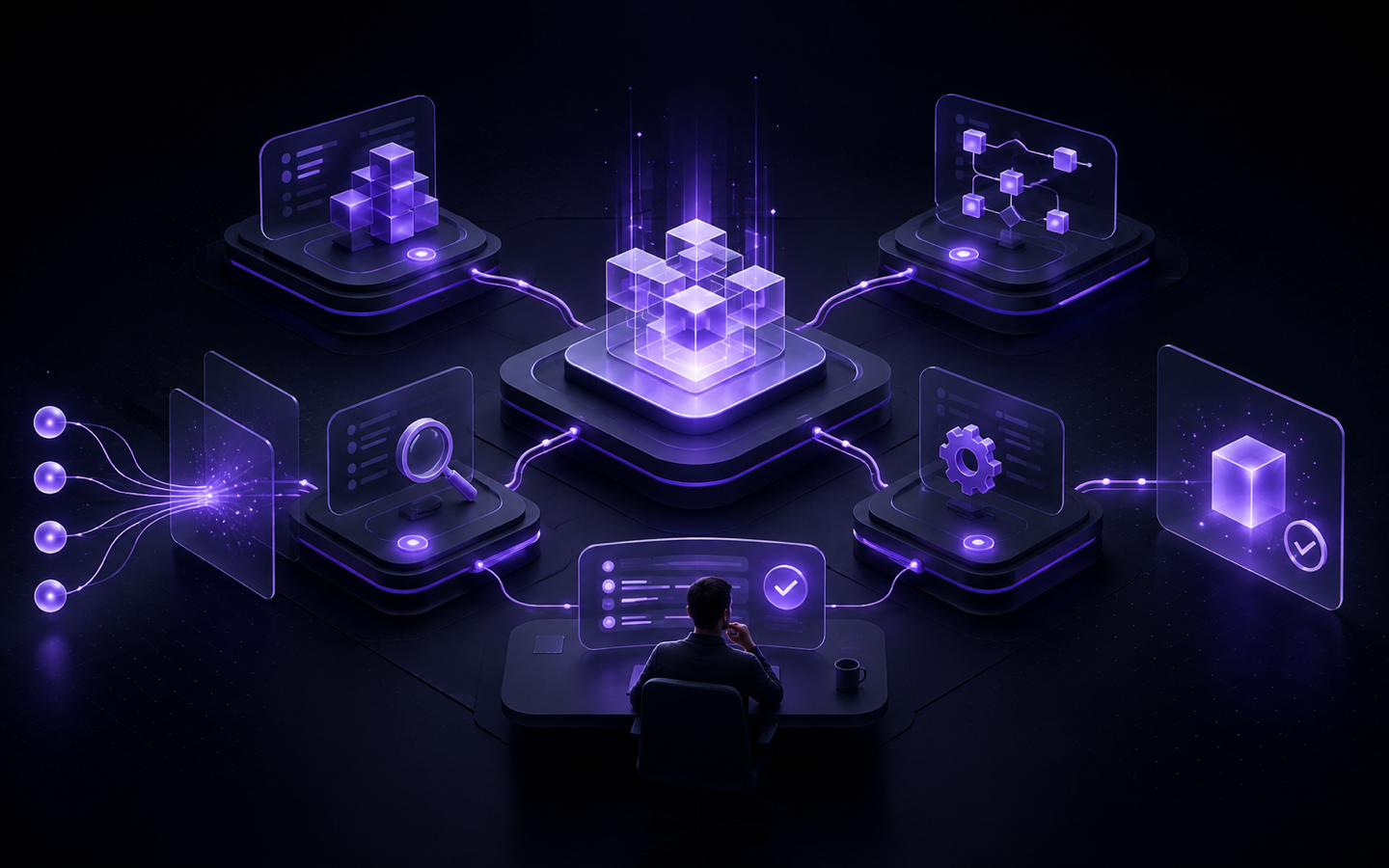
Laplace does not replace Claude Code, Codex, or Kimi Code and does not compete for space in the editor. A coding agent executes inside the repository. Laplace works with team and process context by connecting work sources, running a Context Audit, finding gaps, and organizing specialized digital roles with bounded tools.
A practical combination looks like this: Jira holds the task, Confluence holds requirements and decisions, and GitHub holds the implementation. Laplace helps an agent or a person assemble and check the connected context; the coding agent implements the change and returns its result to the process.
Do not count lines. Count outcomes
Eight times more lines can signal acceleration, or eight times more code to maintain. Companies should evaluate coding agents using outcomes that matter to users and the business.
- Time from an approved decision to a working change.
- Share of tasks that pass review without reimplementation.
- Defects and rollbacks after release.
- Human attention required per completed task.
- Completeness of requirements and decisions retained for the next cycle.
Frequently asked questions about coding agents
- Is it true that programmers no longer write code by hand?
- In some leading teams, yes. Anthropic says Claude authored more than 80% of merged code, while an experimental OpenAI team built a product without manual coding. There is no equivalent statistic for the entire industry yet.
- How is a coding agent different from AI autocomplete?
- Autocomplete suggests fragments near the cursor. A coding agent receives a task, explores the repository, edits files, runs commands and tests, fixes errors, and can prepare a pull request.
- Will Claude Code, Codex, and Kimi replace programmers?
- They reduce manual typing and change the composition of the job. People remain responsible for requirements, architecture, security, validation, and product decisions, even as one engineer can direct more work.
- How should a company prepare for coding agents?
- Start with one repository and a measurable task class. Capture rules and commands, connect tests, define human approval points, and verify the quality of context across Jira, documentation, and code.
- How does Laplace relate to AI coding?
- Laplace operates at the team context and process layer. It helps collect information from work systems, identify gaps, and organize digital roles around a coding agent without replacing the coding tool.